

Skip to content

What Diabetes Does to Your Eyes

Diabetes can affect the lens, retina, and optic nerve, sometimes before you notice a change. Learn why vision may blur, which symptoms need prompt care, and what to discuss at your next eye exam.

Clear sight can feel like proof that your eyes are healthy. Your retinas may tell a different story. Can diabetes make your vision blurry? Yes. Diabetes can temporarily alter focusing and can damage retinal blood vessels. An eye exam helps distinguish these causes, even when your glasses still seem to work.

At Mountain West Eyecare in West Valley City, we help patients discuss diabetes alongside their vision concerns. You don't need to sort out the cause yourself before you call. The useful starting point is what changed, when it began, and whether any warning signs came with it.
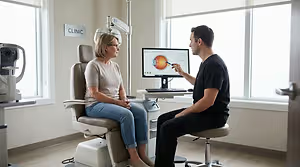
Optometrist explaining an eye diagram to a seated patient in a clinic

Why Blood Sugar Can Blur Your Vision

The clear lens inside your eye helps focus light. High blood sugar can change fluid levels in the eye's focusing tissues, including the lens. Those changes can affect how sharply you see, so a familiar prescription may suddenly feel off.

This kind of blur may occur as blood sugar shifts, including during changes to a diabetes care plan. It can improve as glucose levels settle, but there isn't one recovery schedule that applies to everyone. Don't change medicines on your own to try to clear your sight.

Blur also has other possible causes, such as dry eye, a prescription change, or cataracts. Tell your eye doctor about new symptoms rather than assuming diabetes explains them. A blood sugar reading alone cannot show which part of the eye needs attention.

How Diabetes Can Affect the Retina

The retina is the light-sensitive tissue at the back of your eye. It turns light into signals your brain uses to form images. Over time, high blood sugar can harm its tiny blood vessels. Doctors call this damage diabetic retinopathy.

Weakened vessels may leak fluid or blood. Some vessels can close off, and fragile new vessels may grow. These changes can threaten sight, but early retinopathy may cause no noticeable symptoms. Neither clear vision nor the absence of pain rules it out.

The macula is the central-vision area of the retina, which helps you read and recognize faces. Fluid leakage can make it swell, a problem called diabetic macular edema. That swelling can blur or distort central vision.

Our medical eye care includes evaluation and monitoring, with specialist referral when needed. The National Institute of Diabetes and Digestive and Kidney Diseases guide explains these retinal changes, temporary focusing changes, and other diabetes-related eye problems.

Other Eye Problems Linked to Diabetes

Diabetes also raises the risk of cataracts and glaucoma. A cataract is cloudiness in the natural lens. It may cause hazy sight, glare, or faded colors, and it can develop earlier in people with diabetes.

Glaucoma is a group of diseases that damage the optic nerve, which carries visual signals to the brain. Some forms have few early symptoms. Eye pressure is one part of an evaluation, rather than the whole diagnosis. An increased risk doesn't mean every person with diabetes will develop either condition.

Temporary Blur and Retinal Disease Differ

Lens and Focusing Changes

Cause: Fluid shifts affect focusing tissues.

Possible symptoms: Sharpness may fluctuate as blood sugar changes.

Assessment: Your eye doctor checks vision, prescription, and eye health alongside your glucose history.

Retinal Disease

Cause: Diabetes damages retinal blood vessels.

Possible symptoms: None early on, or blur, distortion, and dark spots.

Assessment: A retinal evaluation helps identify damage and whether additional tests or specialist care are needed.

These patterns overlap. Symptoms cannot confirm a diagnosis, prove that blur is temporary, or guarantee reversibility. An exam helps separate a focusing problem from disease that needs a different care plan.

Which Vision Changes Need Prompt Care?

Call your eye doctor promptly about new or persistent blur, even if it comes and goes. Describe any distortion or dark areas, too.

  • Seek immediate assessment for sudden vision loss.
  • Get care right away for a curtain or shadow across your vision.
  • Seek immediate care for new flashes of light or many new floaters.

The National Eye Institute identifies retinal warning signs that need care right away. Contact an eye doctor or go to an emergency room. Don't wait for a routine visit or for blood sugar to improve.

What to Discuss at Your Eye Exam

Our comprehensive eye exams address vision and eye health. Meet Dr. Bethany Gillett O.D., and bring your questions.

  1. Share when symptoms started, whether one or both eyes are affected, and your diabetes and medication history. Bring recent glucose information if available.
  2. Discuss the eye-health evaluation. Ask whether dilation, which widens the pupils with drops, or additional tests are needed to assess your retina.
  3. Agree on follow-up and communication with your diabetes clinician. Ask when your next eye visit should be and which changes should trigger an earlier call.

Your findings and health history help guide that plan.

Before your visit, write down any questions about reading, driving, or work tasks that have become harder. Note whether the change stays the same throughout the day. These details give your eye doctor a clearer picture of your daily concerns.

How Daily Diabetes Care Supports Your Eyes

Follow the diabetes treatment plan you and your health care team set together. Discuss blood pressure and cholesterol care as well as glucose goals. If you use tobacco, ask about help to quit.

Keep recommended eye visits even when your sight seems steady. These steps can lower the risk of eye problems or help keep them from getting worse, but they don't promise prevention. If daily care feels difficult, tell your clinicians what gets in the way. A practical plan starts with an honest conversation, not blame.

Diabetic Eye Exams in West Valley City

You don't have to wait until your glasses stop helping to ask about your eyes. At Mountain West Eyecare, the next step is an eye-exam request to discuss diabetes and vision. Tell us about your diabetes when you request your visit so we can discuss the reason for your exam.

A request does not itself confirm an appointment. For sudden warning signs, seek immediate assessment instead of using a routine request.